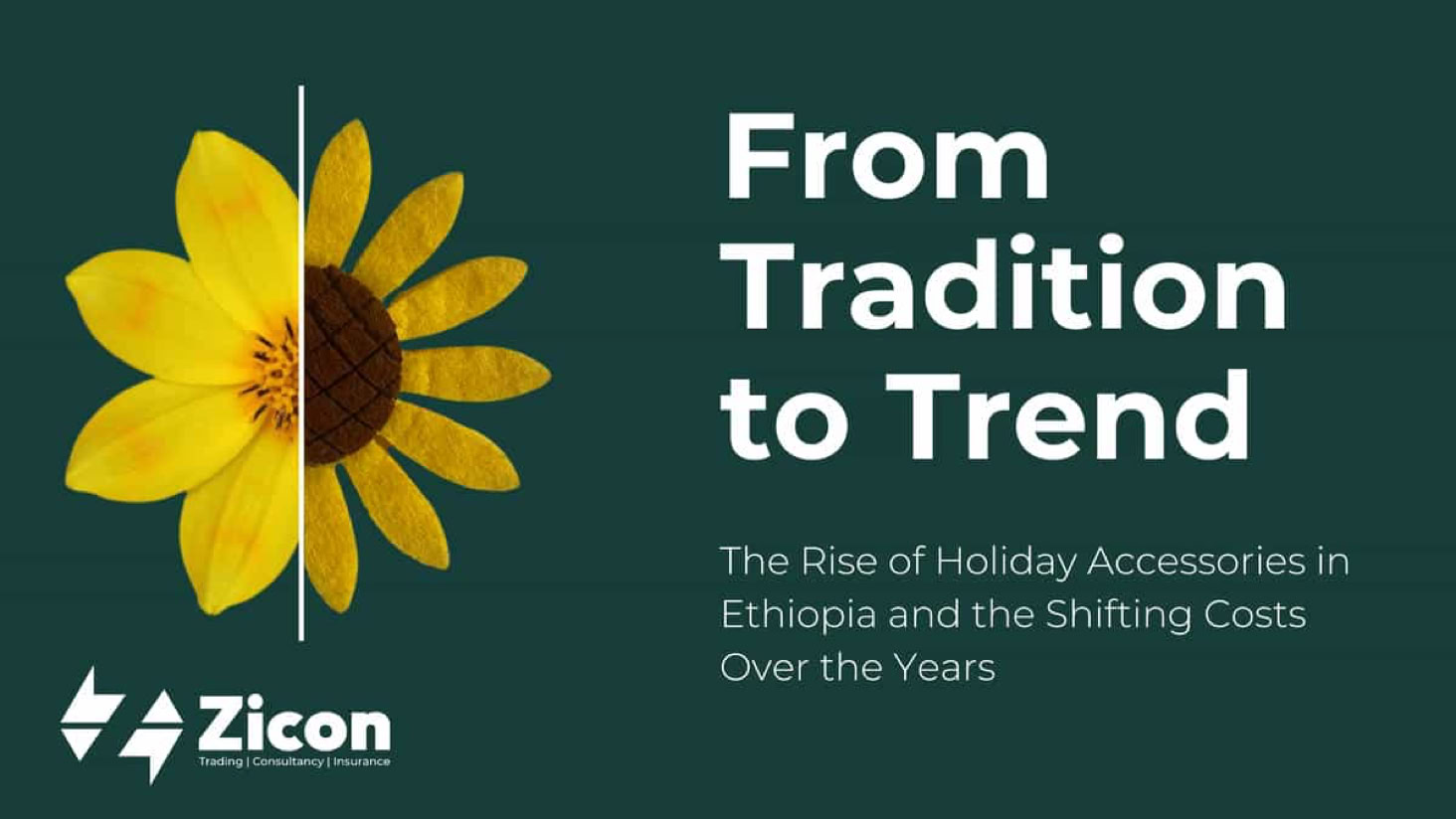
During the Ethiopian New Year, the streets of Addis Ababa become adorned with holiday accessories that mark the season. Traditionally, the Adey Abeba, Ethiopia's iconic flower, has symbolized this time of year. However, in recent years, the sunflower has taken center stage, with models of the bright yellow flower appearing in shop windows, hair accessories, and street vendor stalls. But this shift from the Adey Abeba to the sunflower is more than just a change in aesthetics; it reflects broader economic forces at play in the manufacturing, supply chain, and creative sectors.
The rising prominence of the sunflower model speaks to the challenges of local manufacturing in Ethiopia. Adey Abeba, an indigenous plant, holds significant cultural value, yet local production of symbolic items based on this flower is limited. On the other hand, imported sunflower models, mainly produced in China, have flooded the market, meeting the seasonal demand for festive accessories. These imported items are a simple yet effective response to a gap in the market, capitalizing on the need for symbolic representations of the Ethiopian New Year.
Supply Chain and Seasonal Demand
The sunflower hair clips and larger decorative models sold in Addis Ababa are part of a well-oiled global supply chain. These items are manufactured in China and imported into Ethiopia, where they are sold by street vendors and in commercial spaces. The relatively low cost of production and the broad cultural appeal of the sunflower make it a profitable venture for Chinese manufacturers. Ethiopian importers, in turn, benefit from the ease of access to these products, bypassing the challenges of establishing local production.
The demand for these items peaks during the holiday season, and as a result, prices have risen sharply. Last year, a sunflower hair clip cost around 15 ETB, but this year, the price has jumped to 30 ETB—a 100% increase. Similarly, larger sunflower models used in storefront decorations have seen a price increase from 150 ETB last year to 250 ETB this year. This dramatic price rise highlights the economic pressures in the supply chain, including inflation, import costs, and increased demand during the holiday season.
Creative Sector and Cultural Influence
The design and craft of holiday accessories are not merely functional but symbolic. The sunflower’s widespread appeal across cultures has allowed it to overshadow the more culturally specific Adey Abeba. Chinese manufacturers have capitalized on this by producing a versatile product that can be marketed both locally and globally. For Ethiopia, the lack of local designers or manufacturers producing Adey Abeba-inspired items has opened the door for the sunflower to dominate the holiday scene.
This presents a missed opportunity for Ethiopia’s creative sector. Local designers and craftsmen could leverage the cultural significance of Adey Abeba to create products that resonate more deeply with Ethiopian consumers. The absence of competition in this space has allowed imported sunflower models to fill the gap, but with the right investment in local production, Adey Abeba could reclaim its place as the symbol of the Ethiopian New Year.
Economic Implications
The rise in the cost of sunflower accessories points to broader economic challenges in Ethiopia’s manufacturing and supply chain sectors. As Ethiopia grapples with limited local production capacity, particularly in culturally significant goods, imported items continue to dominate the market. The price increases also reflect inflationary pressures and the logistical challenges of importing goods. However, this also highlights an opportunity for local small and medium-sized enterprises (SMEs) to step in and produce culturally relevant items like Adey Abeba-inspired hair clips and decorations. By doing so, local businesses could benefit from the growing demand for seasonal holiday items while promoting Ethiopian culture.
In conclusion, the shift from Adey Abeba to sunflower models during the Ethiopian New Year reflects both a changing cultural landscape and the economic realities of supply chains and manufacturing. As prices rise and imported goods dominate, the opportunity for local manufacturers and designers to reclaim the market and revitalize Ethiopia’s creative sector has never been clearer.
Tel: +251115621259
Email: click here
Address: Addis Ababa, Ethiopia, Mexico area, Hibret Bank Head Office Building, 1st floor